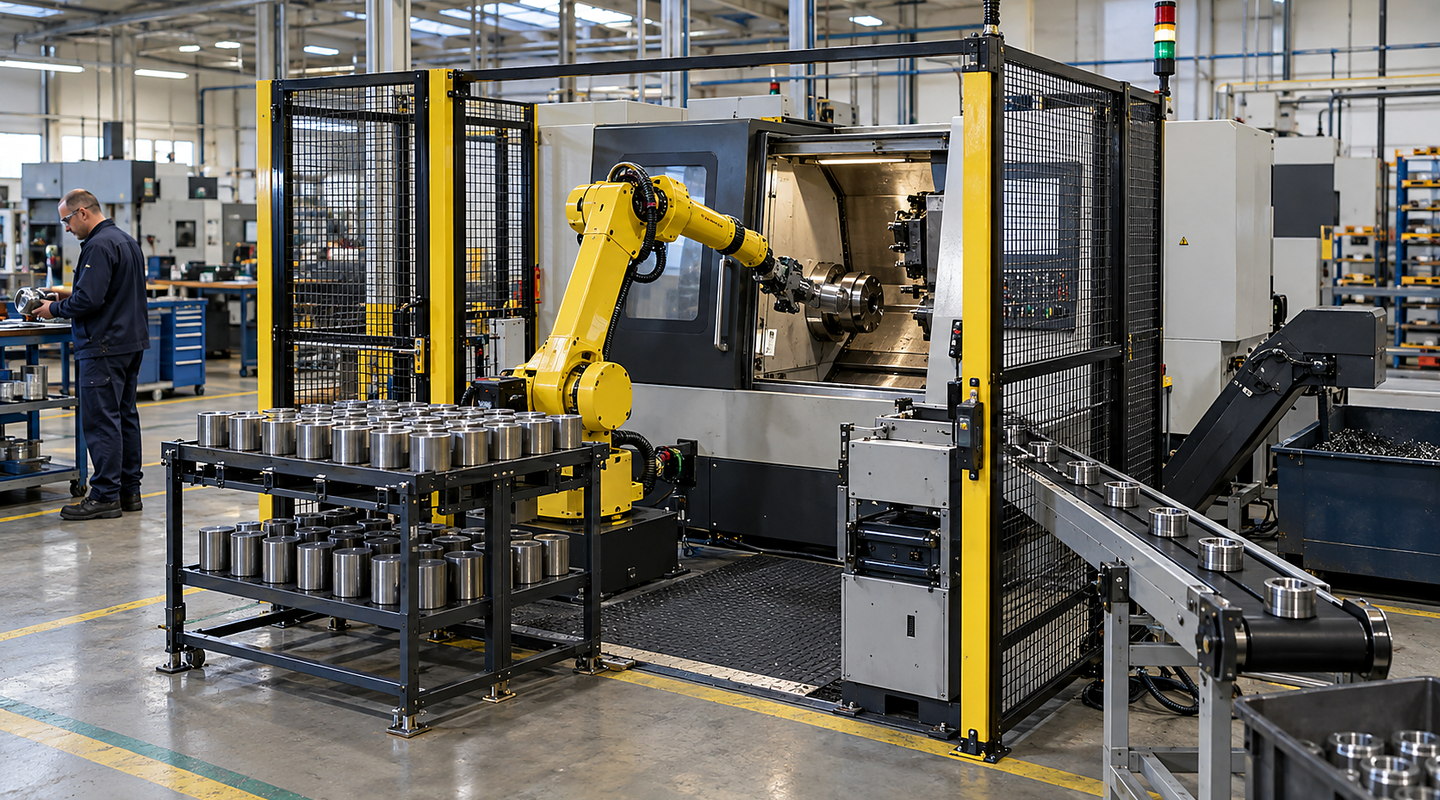
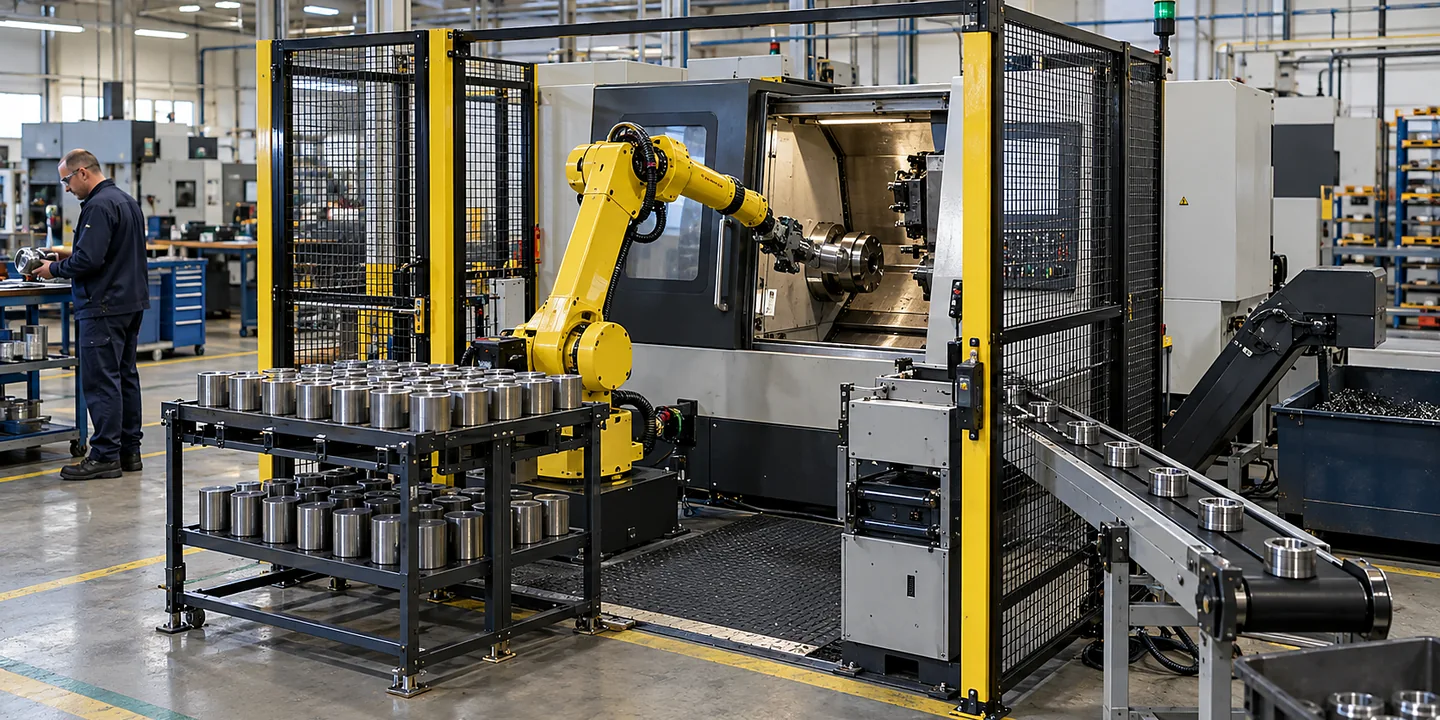
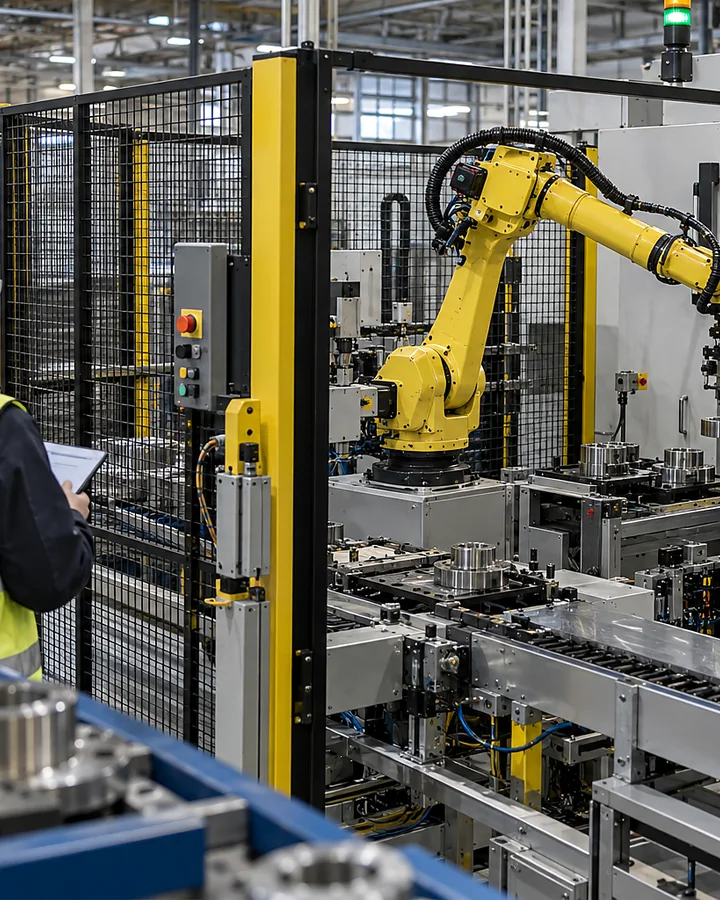
A mobile cobot cell is a relocatable robot workstation, not automatically a self-navigating robot. Its usefulness depends on how reliably it can be moved, docked, connected and returned to an approved task at each intended machine.
Speak directly with Oxford Industrial Automation about movable collaborative robot cells.
Quick answer
Can one movable cobot cell serve several validated production tasks?
Describe each destination machine, product and task separately, including docking, services and control connections. Define how the correct setup is confirmed after moving the cell. Assess tooling changes, positioning repeatability and safeguarding for every intended location, with a recorded commissioning and restart procedure for each approved task.
Application decisions
Compare mobility by the complete relocation task
Decision 1
List every destination and operation
Specify the machine, part family, tool and operation at each location. Record reach, working height and space around the destination. One successful demonstration does not establish that the same cell suits a different machine, layout or process.
Decision 2
Define repeatable docking
Show how the cell is located, secured and checked relative to the work fixture. Include floor condition and movement of the destination equipment. Agree how the correct position is confirmed before automatic motion, rather than relying on a painted floor outline alone.
Decision 3
Control tooling and recipe changes
List grippers, fixtures and programs required for each task. Define checks that the fitted tool and selected recipe agree with the destination and product. Include storage and handling of change parts in the relocation procedure.
Decision 4
Plan services and machine handshakes
Document power, air, data and the host machine signals that need connection. Specify how connected equipment confirms readiness and how disconnected or incorrect connections are handled. Include cables and hoses in the layout and operator-access review.
Decision 5
Assess every intended working arrangement
Review the robot, tool, carried part, surrounding machinery and people together. Moving a cell can change access and trapping hazards. Collaborative equipment does not remove the need to assess and validate the complete application at its intended location.
Decision 6
Measure productive time after the move
Include disconnection, travel, docking, setup checks, first-off approval and recovery in the comparison. Relocation is useful when the available production window justifies that work. Record these conditions in the mobile cell specification checklist.
Compare the useful production window at each destination with the work needed to move and re-establish the cell. A flexible layout only helps when docking, setup and acceptance are practical for the intended schedule.
Collect layouts, parts and process requirements for each planned workstation.
02
Prove docking and connection
Demonstrate locating, securing, service connection and correct setup confirmation.
03
Assess and accept each application
Document the complete task and safeguarding arrangements at every approved location.
04
Rehearse relocation
Follow the agreed move and restart procedure with the intended operators and record the outcome.
Important limits
Know what needs a separate check
Cycle time depends on the complete process rather than robot speed alone.
Part presentation, tolerances and recovery cases must be included in feasibility work.
Collaborative operation or automatic handling cannot be assumed safe without an application assessment.
Your final solution for movable collaborative robot cells must reflect the law, current standards and site-specific risks that apply to your installation.