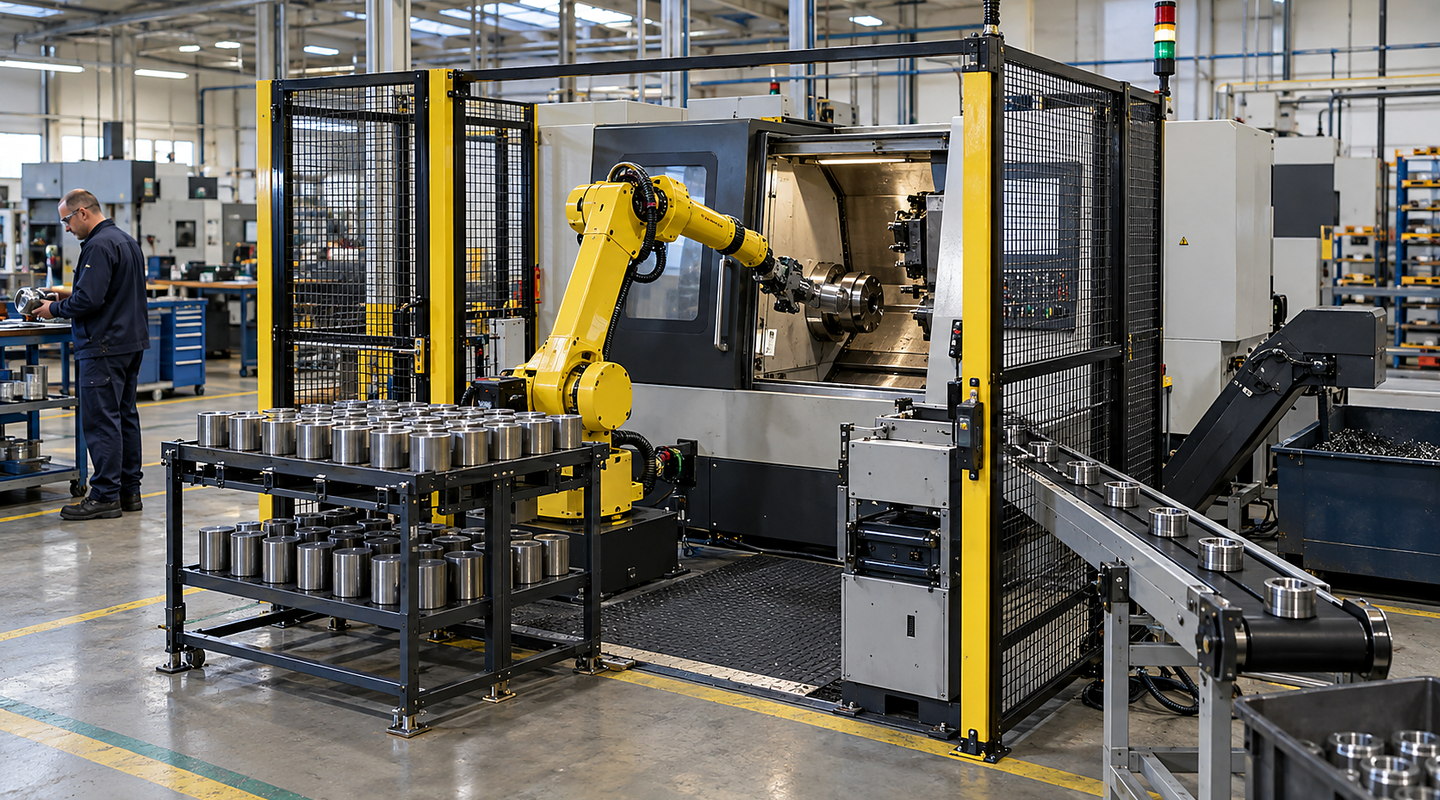
Movable Collaborative Robot Cells Selection Guide
Choose movable collaborative robot cells by comparing your parts, process, rate, access, data needs and required results.
Compare mobile cobot cell concepts at every intended workstation, not just one demonstration. Review part presentation, tooling changes, cycle time and the method for relocating and locating the cell. Agree checks for connections, operator access, recovery and each intended task before choosing the configuration.
For repeatable production using movable collaborative robot cells, a short trial that reproduces the difficult condition is often more useful than a long list of nominal specifications.
Compare options in the conditions where they must work — Movable Collaborative Robot Cells
Plan movable collaborative robot cells around your parts, process, cycle time, tooling, recovery and acceptance criteria. Discuss the highest-risk feasibility questions with Oxford Industrial Automation. A useful shortlist should show how every option copes with part, product and process variation for movable collaborative robot cells and operator access, recovery and changeover.
Discuss your application
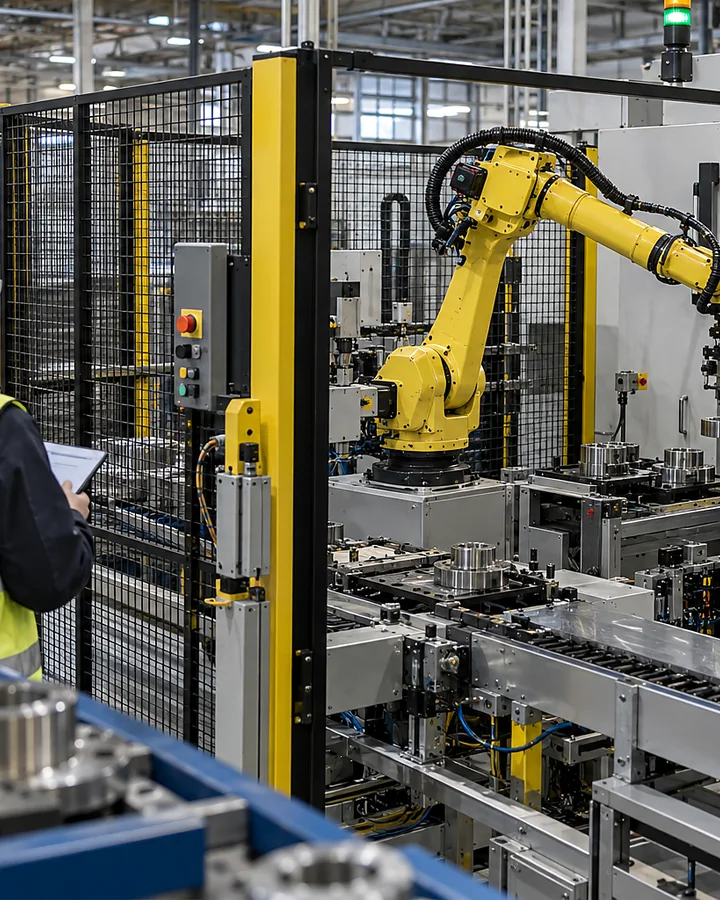
Compare movable cobot cells by the useful time left after relocation
Mobility is useful when the cell can return to an approved working state at each destination with a predictable amount of setup. Compare a shared cell with a fixed station using the production schedule as well as the robot specification.
Separate movement from recommissioning work
List transport, locating, securing, service connection, tooling change, recipe selection and the checks before production restarts. Identify who performs each step and what confirms it is complete. A cell that rolls easily between machines may still need substantial setup at each one. Keep relocation time separate from the normal cycle once the task is running.
Compare a whole shift using a simple example
In a hypothetical eight-hour available window, two relocations taking 30 minutes each leave seven hours before other planned stops. This arithmetic is a planning example, not a prediction for a particular cell. Replace the times with demonstrated site figures and include any operator time or competing machine demand. A shared cell only helps both machines when their useful operating windows can actually fit the schedule.
Make each docking point a defined configuration
Record the intended floor position, fixture datum, service connections and tool for every task. Decide how the correct combination is confirmed and how unexpected changes are detected. Check access and safeguarding at each location through the responsible application assessment; a cobot label does not make a moved cell automatically suitable for its new surroundings.
Rehearse the awkward move and return
Test the destination with the least space, most demanding setup or different tooling. Include a connection that is absent, an incorrect recipe and a move that is interrupted before completion. Demonstrate how the operator recognises that the cell is not ready. Retain an approved setup record for each destination and use the mobile-cell checklist to compare these responsibilities across proposals.
Pause before choosing when…
- Only perfect or hand-selected examples of repeatable production using movable collaborative robot cells are available.
- No one has defined how run-off criteria and production evidence will be evaluated.
- The normal range for part, product and process variation for movable collaborative robot cells is described only as “usually fine” but has not been bounded.
- Your operator, cleaning, maintenance or recovery access has not been considered.
- Quoted performance depends on another machine or data source that is not included.