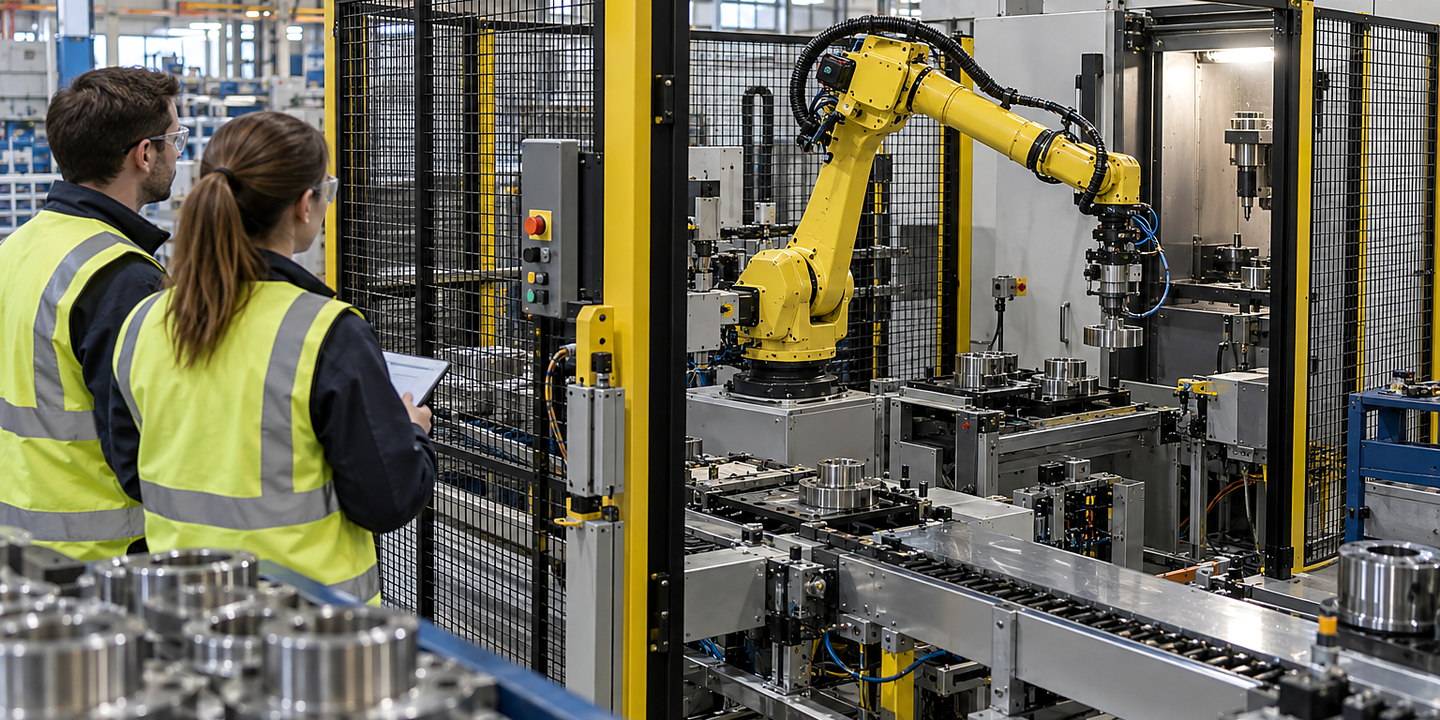
About Movable Collaborative Robot Cells
Meet the Oxford Industrial Automation team behind Movable Collaborative Robot Cells and learn how we approach movable collaborative robot cells.
Oxford Industrial Automation is the team behind Movable Collaborative Robot Cells.
We help production, engineering and quality teams make informed decisions about movable collaborative robot cells.
Specialist engineering for a clearly defined production need — Movable Collaborative Robot Cells
Plan movable collaborative robot cells around your parts, process, cycle time, tooling, recovery and acceptance criteria. Discuss the highest-risk feasibility questions with Oxford Industrial Automation. Oxford Industrial Automation handles enquiries about movable collaborative robot cells directly.
Discuss your application

Oxford Industrial Automation
Oxford Industrial Automation focuses on robot cells, machine tending and production automation. For Movable Collaborative Robot Cells, the conversation starts with repeatable production using movable collaborative robot cells in your operation, plus part, product and process variation for movable collaborative robot cells and arrival pattern and presentation, so the proposed route reflects real production.
Your final movable collaborative robot cells scope must also account for operator access, recovery and changeover, run-off criteria and production evidence, current regulations and the conditions at your site.
Legal operator: Oxford Industrial Automation Ltd, company number 17435956. Registered office: Unit 133, 5 High Street, Maidenhead SL6 1JN, United Kingdom.
Clear advice about movable collaborative robot cells, grounded in your application
- Questions about part, product and process variation for movable collaborative robot cells and your real operating range
- Clear options and important limitations
- Focused trials where arrival pattern and presentation creates uncertainty
- Direct contact with Oxford Industrial Automation
- Practical next steps for repeatable production using movable collaborative robot cells